We who wait
In the dark
Knowing silent love
Let our tears combine
Our joy dilate
Our gifts take hold
As truth itself
Unfolds
Michaelstantonmusic.com
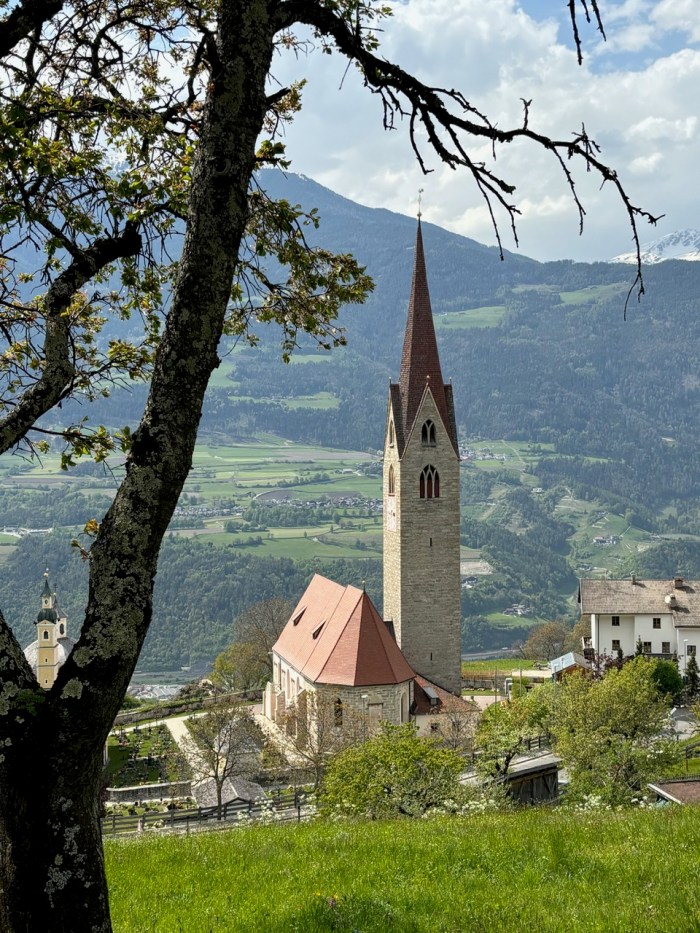
Image: ©Bruce Granger 2025
Kiy Anjali
We who wait
In the dark
Knowing silent love
Let our tears combine
Our joy dilate
Our gifts take hold
As truth itself
Unfolds
Image: ©Bruce Granger 2025
In the sunlit climate of a tempered heart
Calls a distant voice
In whispers to the soul
Now I speak of still and silent figures
Skies open
Arms outstretched
Dance
Yes dance
True sorrow leaves no track behind
And leads us back
To love
Litter
A bone with no meat.
Such a mean little word.
Though, by litter, what do I mean? Shall I mean refuse, clutter, brood, or straw? Or shall I mean the leavings of intention thwarted (a litter of words)?
A need, now, to blow between, as the wind blows, parting leaves, shaking deepest thought into the mouth, and by so brief a pause as breath allows, belying both sense and reason, giving to purpose the lie. Or must we from the tense, laid now either waste or fallow, take our bearings?
Yet we persist, holding hands up to the tide and to the wind, leaves of autumn falling now in summer, and in spring the winter snows, covering ground that, but for memory, would thrive, and death in idle bones for fear of death.
Tomorrow’s dust we sweep today, and in the sweeping lose the scent, the taste, the very breath of presence—of life so inescapably eternal as to seem fleeting.
That path in the near distance, death-inclined, is safe. Yet, as a cloud unbroken scours the eye, the tender shoots of presence, seeded in the countless spring, and in the countless summer bedded, and the bud, blown like a kiss, opening now to receive its winter, clings — blush of death on winter skin.
What, then is life but common instance of confounding, common loss and common finding, seasons blown? And what is love but blind refusal, blindly, to condone?
Stop now! Sweep the ashes of dead fires into the mouths of death, there to feed the dying embers of complaint.
Life eternal, death the shadow,
nothing lives that cannot die,
nothing wounds
that is not wounded.
Blame forbear, seek rather cause,
and, cause withstanding, live!
That flesh that, growing around
a healing wound, is raised,
knows more of love in its true sense
than we.
Too late for wounds, defences weak.
Too late for faces,
graven in the snow, to melt.
….. Too late.
After Neruda, Copyright © 2013 Marita Llinares
Fix your heart on me
For I do give you all
The sun at night
The moon by day
Unexpected sorrow
Sudden joy
All these to me belong
At ninety three she paints the decks white
In her silken nightdress
Plucks a star from the black sky
And calls it hers
Ah lover of clear skies
Paint your strokes both far and wide
And freely
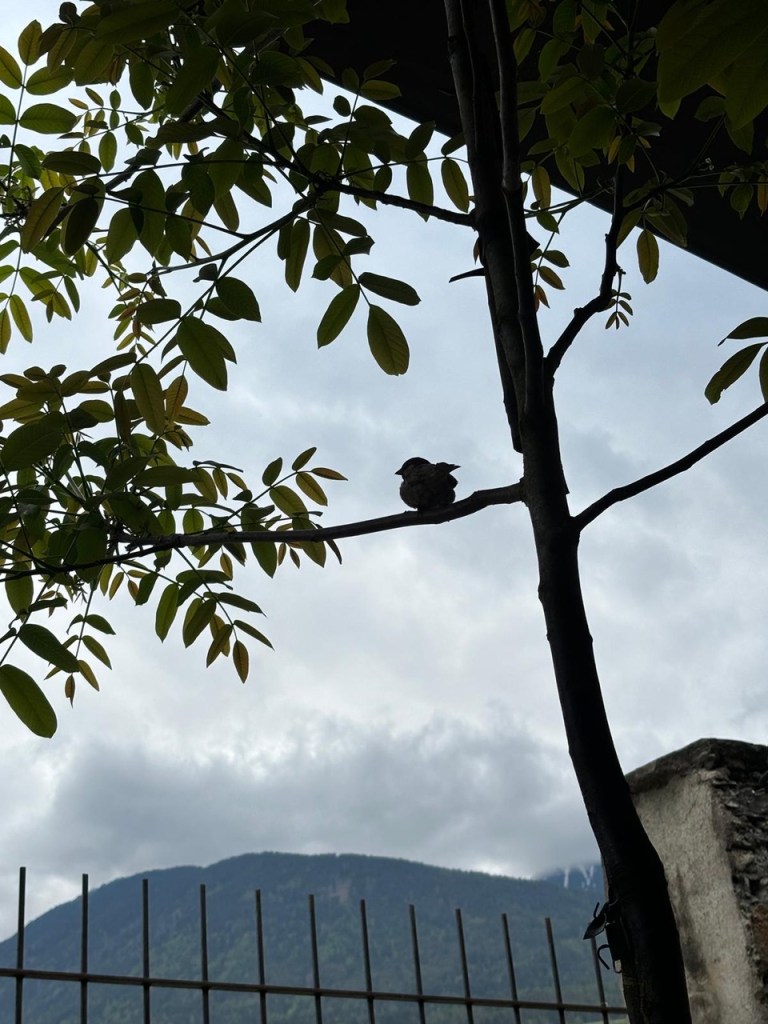
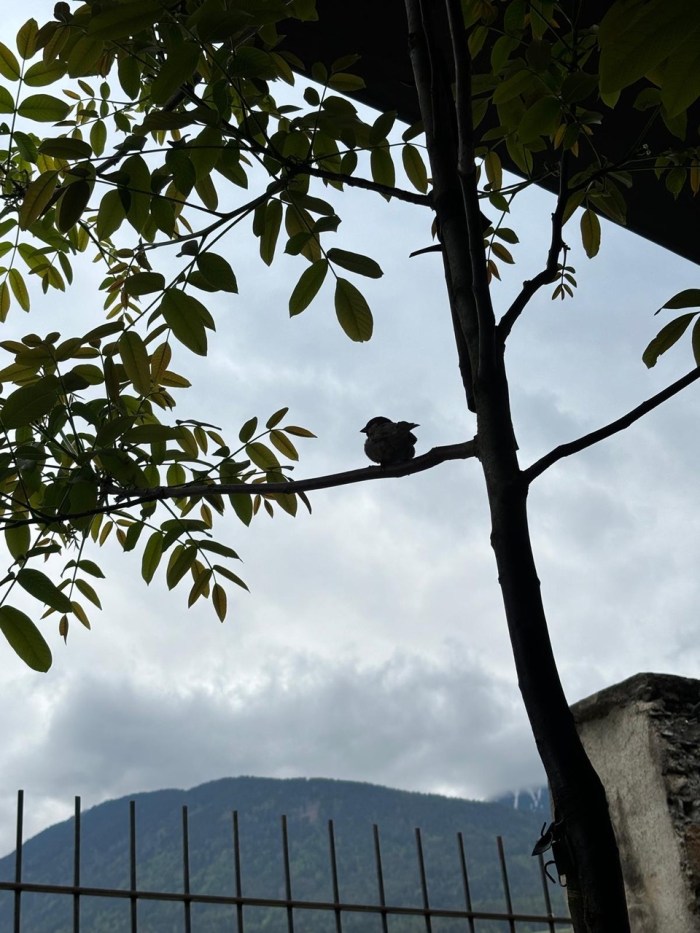
Photo credit: ©Bruce Granger 2025
She paints a picture in her sleep
Wondering if it’s one she will keep
She goes to the salty sea
To play
And lies in the silky sand
All day
Dreaming of crumbles
To give away
She sits on a train
To God knows where
Diamonds threaded through her hair
(Written for Jane’s grandchildren, Coralie and Lachie at her passing)
On this dark and silent morning
My poet friend Marita
Left her worn out body
Hallowed by a new moon
The angel of words
Came to greet her
And an opera of voices
Sang praise
I do not know which to prefer
…
…
The blackbird whistling
Or just after
—Two Ways of Looking at a Blackbird (pace) Wallace Stevens
I will speak plainly to merit my place, will not swallow the words I am fed, but will grow lean on my flesh.
What, to me, is the world?
Dead to the world, I grow the slenderest of branches, which, like splinters, break the skin—and blood will tell.
How then to silence it but by a letting? Heal a wound, and feed a hunger for corruption!
•
Flesh flies lay their eggs in open wounds.
No alphabet can conjure life. And, ignorant of fundamentals, representations unheard of, can a hand that nurses anger be a token of affection? Can a child with bitten fingers build a house on a foundation?
•
In the summer of a life we see with eyes, and leaves grow green as sunlight through the branches. In the summer—
But this is a poem—and can a child with broken fingers, can a child with swollen fingers—
In the playroom, a box, every block cut to size, a block deep, every block cut to fit, and room for growth a mirror to the blind.
•
At night, the lid closes.
In the playroom, cubes and arches, a spire. But no bedrock. Nothing firm. The leaves are dead. In the ground, their roots bleed.
•
In the playground, children fight.
Yet the tree serves a purpose. Stripped of its bark, the tree thrives, as does the child in her clean face, her nails not bitten to the quick,
not bleeding—
•
And, oh the triteness of the phrases, coming swiftly to the tongue, unbidden, the triteness of death on a cold morning, the dying done with, and only the done things to do.
But can it bleed? Can the root bleed?
•
Beetles bore holes in the dead, making dust.
But the child will not build, feeling in her mouth the taste of dust, her teeth on edge, like a saw. And, serving a purpose, is the tree not clear of trespass?
A blade severs the vein – but the bite?
•
The child bites. The bite wounds.
That raw light at Guernica, like a saw-blade, cutting ice, the frozen cries of women, horses neighing. A bull grows a thorn.
•
But no blood. Terror. But no life.
Depiction kills the eye, and who dare tell a tale of blood, wiping his tongue on his sleeve?
•
To Judas, forty pieces. For Guernica?
Reputation.
Who stands between calamity and the bare canvas? What of life, pierced to the soul, can be offered to the eye? Have eyes an appetite for blood? What tribute against lamentation?
•
Yet—
Who dare not!
For Art will forever be Judas, telling but not doing, moving but not moved, hanging but not hung.
What child will build a house she cannot sleep in, her bed red with weeping, her name graved on the long-lidded eye, nailed down now to no purpose? A done life.
•
Flesh bleeds. But the bite?
And, oh the triteness of the phrases, unbidden. For close on ‘nails not bitten’, ‘not bleeding’, comes, as if to close a living eyelid on a trivial affair—
•
“Or it seems.”
On a day without life, the sky grey with my insufferable pains, with my ‘nothing unmeticulously ranged against the tedium of precision’, umbilicals severed, too close to matter, spirit broken (as we say), spilling the detritus of our birth, to be cleaned up (as we say). And the waste now cremated, burnt to ash, those legitimate precursors of my smiles and of my tears will wash me clean, brightening my one moment of relief—
Sunlight favours our endeavours.
Rain is plentiful in season.
Gods are conceived
to answer a need of praise, a shield
against privation.
But winters will come with good fruit,
and my brows, all laden with desire,
will praise—
And, oh the triteness of the phrase. For what awakens in us wonderment and dread? What instils in us such fear as to create a quaking limb, severed from reason, a finger severed from a hand and made now to stand proud, raised above a standard, taking stock of what is safe—of what will not offend.
A passing cloud, a dying sun, betoken now my happiness and grief!—and what a scavenger should eat is fittingly disposed of, for the dust of Eden is the dust of God, and is God safe?
•
In the midst of grief, of lamentation – is there life?
And, oh the brightness of the phrases!—saying nothing, meaning nothing.
Sound. But no fury. Silence. But no stillness. Nothing seems—
•
Nothing—
The detritus of birth is carrion, is flesh. The detritus of death is life.
•
Yet, in my sleep, they are assiduous, harvesting the dead fruits of a labour, putting ribbons in my hair, and dead shoes to walk straight in, as if needing to breathe life into those graved, unsmiling faces of my nursemaids, who changed me.
I am free when I see no one in my way, no one standing proud of my ‘achievement’, no one caring much, and rightly, that I live.
It embarrasses to look. My face, unlined, is provocation, and who will go further, farther, than the line drawn lightly with the sharpness of a tongue?
Nothing wastes me more than want of will, all risks within a circle, nothing ventured for fear of its loss.
•
All-contained.
Against war, we wage war!
We set faith against faith, riding bareback on as many flanks as there are creeds, and friendship admits no one to the ranks, for fear of corruption—for fear of contagion.
•
Life rubs off. Our inflections must be seemly.
In small numbers there is safety. But have we considered—that a number is made greater only by some means of calculation? One gathers to itself as many Ones as it can muster, thereby giving to the world an appearance of succession.
•
The greater engulfs, and the lesser puts at risk the stability of a foundation, not built but acquired.
As one lances an abscess to let out the pus, a friend will cut lightly to hasten relief—for, when ripe, a wound is tender, at its centre a red spot. Ubi pus, ibi evacua.
A friend feels for us, but cannot bear our pain! Not for a friend the dark night of a soul, needing light.
Better, then, a letting than the madness of corruption, and where is the friend who, cutting deep with a blunt knife, will risk infection?
•
Three times the cock crows, and who is denied?
And so nothing comes my way. And looking sideways, with my slanted gaze, I see shadows, palely diminished, walking lonely to their grave.
And no one waves, thinking himself still alive!—not knowing that distraction (a way of enchantment) is all of a life.
And no one wants or needs to be distracted by plain speech.
•
Confoundings are simpler, since justifiably dismissible,
and from my hoard of generosity, I dispense them in good measure!
Of all the affections, love in season is the cruellest, for it will rip the heart out of the dead, breathing life into reluctant wounds, which would as soon not live as be put to the test.
Look! And you will see – that everyone is waiting, though not daring to strip clean of their presumptions the forgatherers of truth, now profiting by throwing a little light, like the stump of a candle, into those unlighted rooms we grew down in.
•
Only love leaves a wound still on heat.
On the shoulders of giants’ is a worthy phrase. But the
giants are all dead, and their findings, if unproved, are beyond proving, and, if proved, are the live point of a departure.
•
One who fails to prove his point whilst living leaves to others only sticks with which to light the very fire that has consumed him.
I must look straightly from now on—for to look sideways for a glance is to anticipate indifference, thereby forgoing my one chance of life.
Oh, but my nursemaids dressed me nicely! They put ribbons in my hair, on my feet those bright shoes in which my face shone darkly, befitting a grave child.
•
But I behave badly, speaking plainly. Though not without guile, knowing the cost of no meaning between shades of light!
So I practise my manners, behaving, as I ought. Though sloping at night into shadows, where the ore is to be found and the detritus clings.
•
And now?
Born to arrive at the dead place of a departure, I am ushered to a seat in the grey area, where I wait, lit by the eyes of strangers, who incessantly invite a glance, if seeming close.
But abstractedly, nervously, fearing to miss their rightful turn, working well into the corners of the night to ensure their small measure of life—though not noticing, until too late, when the lights dim and dim, that the room they wait in is the means of their conveyance.
And as each pair of eyes closes down for the night, I am left, the very last in that grey place, waiting vainly for the wave that will engulf me. Waiting for the Cry I must surely have missed.
•
And is there hope?
It depends. All depends.
We must not labour till the end. There must be time enough for backward glances, for appraisals, for making a way out of pity, a means out of love.
Our pains must be turned to account, or all is lost, nothing put by against the long days of a life that will end with no more than one half of a breath.
When we wake (if we do, as we may), our own words must be there to greet us, eager for life, though with no knowledge of our parting, all grief annulled, a clean life to bite on, a suffering of our choosing, suffused with such light as we can salvage from our one interminable Cry—
We must not work to the end, or the glances of strangers are sure to be missed, and the wave of the dying overlooked.
To die, all alone, in the company of those who have known us too well, therefore barely, effaces a life.
To die, all alone, in the company of strangers who have barely known us, but who ask still to be shown what now amazes, taking our breath, is to die living.
•
How, then, to end?
No!—How to make a decent end, with its ribbons undone, and its shoes, and the leather all crazed, reflections splintered, worn out, and the child, in the womb of its life, not tidy, not mannered, the backcloth not a setting for exposure, and nothing there to frame an image frozen in a weary time, the sitter disposed, now, to defiance, to breaking from the edges, bleeding out into the margins, making no allowances for travesties of reason caught by nothing in its fall.
•
IS there hope?
To end badly, says the child, is to end decent, impolitely, nothing contrived or unlived, spitting in the eyes of those in need of respite from the self-created rigours of a self-negating life.
And now, outrageously, daring intrusion,
a blackbird settles on a branch,
on a REAL branch,
not three glances from my eyes
the tree preening itself,
budded for Spring.
And soon, as if to mock a need of words,
the church spire and the graves
will be shrouded in leaves.
Blackbird, Copyright © 2012 Marita Llinares
See also ‘Decade’. Long Poem Magazine issue seventeen
So you went into the dark
And found a burning flame
You thought as separate
Yes be engulfed
For it will take your all
Leaving only ashes
Filled with starlight…
Under a canopy of love

A call to the beloved

A rain of withheld tears of joy

The pulse of earth and sky

Such pungent sweetness


Never lost

Images on this page © Bruce Granger 2025